Questions to ask your parents about your birth, the one day you cannot remember.
Good questions to ask your mum or dad about the day you were born and your first years: what happened, who was there, and what they have never told you.
Every adult has been present at one important event that they cannot remember, and that at least one other person remembers with unusual clarity: their own birth. In the early 1990s the American childbirth educator Penny Simkin tracked down twenty women who had attended her classes between 1968 and 1974 and interviewed them again some fifteen to twenty years later about their first births. Her report, published in the journal Birth in 1992, found that the women’s memories were generally accurate and often strikingly vivid, particularly of the onset of labour, the arrival at the hospital and the birth itself. Most lapses were minor.
It is a small study, and it should be read as such. But it points to something that most people never act on. If you are searching for questions to ask your parents about your birth, you probably already suspect that your mother, and your father, if he was there, hold a detailed memory of the day you arrived. It is stored in the one place it cannot be looked up, and it is the only copy.
This post explains why those memories matter, what to ask your mum or dad about your birth and your first years, and how to ask when the story is complicated.
Why do your parents remember a day you cannot?
The reason you remember nothing is covered in my post on childhood amnesia: adults retain almost no episodic memory from before the age of about three. Your first years happened, but you were not equipped to keep them. Other people kept them for you.
Your parents were equipped, and the events were unusual enough to be kept. Birth is rare, intense and unrepeatable, which are the conditions under which memory holds. Simkin’s paper also noted a “halo effect”, meaning that how a woman felt about the birth tended to colour what she remembered. That is worth knowing before you ask. A parent’s account is not a recording. It is a memory shaped by thirty or fifty years of retelling and by what the day came to mean. It is still the best account that exists, and the shaping is itself part of the story.
Does knowing the story of your birth matter?
There is some evidence that it does, though it should be handled cautiously. The Emory University psychologists Robyn Fivush and Marshall Duke developed a short “Do You Know?” scale, a list of twenty questions about family history, such as where your grandparents grew up and how your parents met. One of the items asks whether a young person knows what went on when they were born. In a study of 66 adolescents aged 14 to 16, those who knew more about their family’s history tended to score higher on measures of emotional well-being and sense of identity, even after the researchers allowed for how well the family functioned in general.
The sample was small and the finding is a correlation. A teenager who knows many family stories probably lives in a family that tells them, and that may be doing the work. But the result fits a simple observation. Your birth is the first chapter of your own story, and for most of us it is told by someone else or not at all. Being able to say “I was born during a storm” or “my father drove through the night to get there” gives you a beginning that is specific and yours.
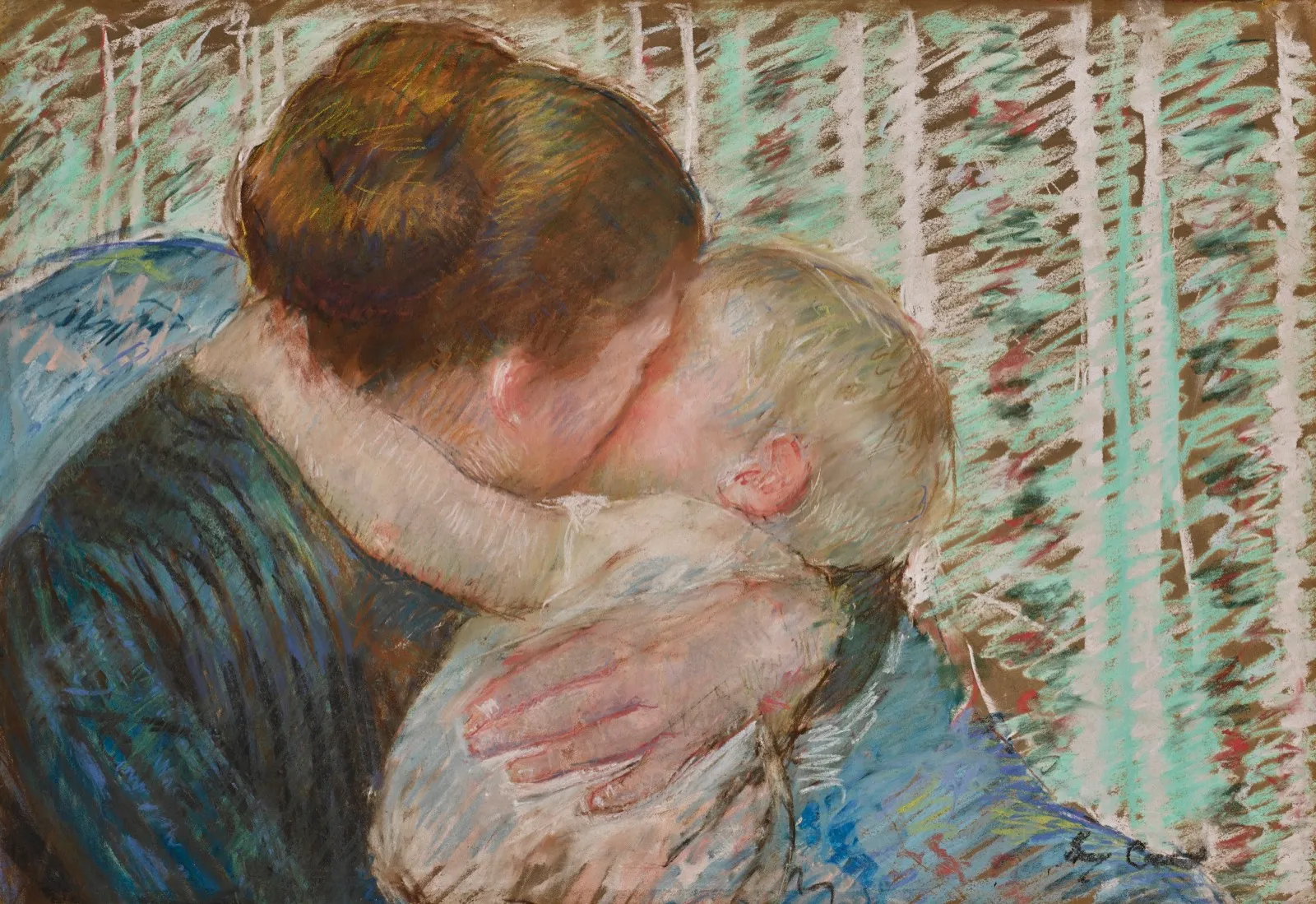
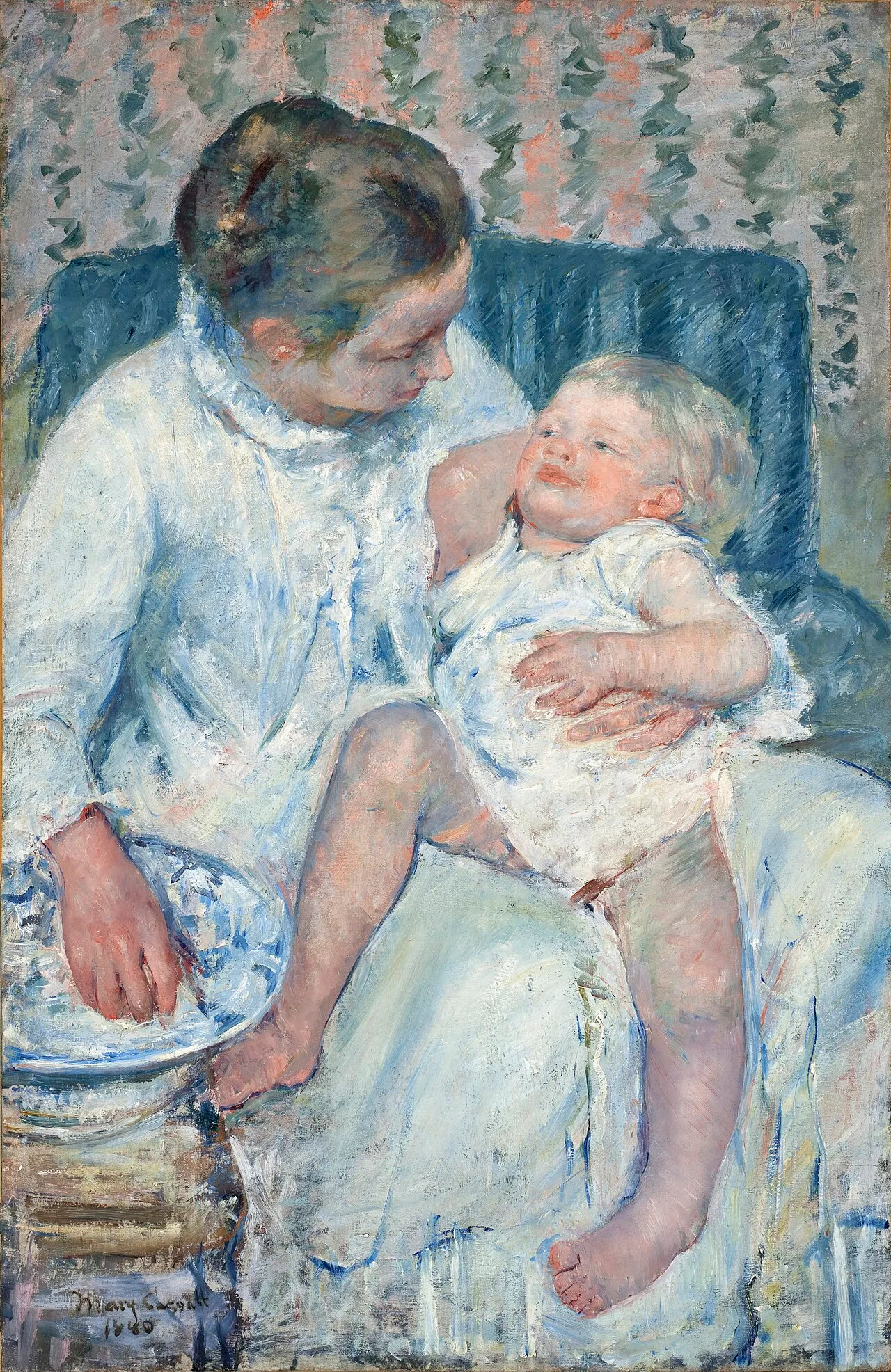 “Mother About to Wash Her Sleepy Child” by Mary Cassatt, 1880. Los Angeles County Museum of Art. Public domain.
What are good questions to ask your parents about your birth?
Begin with the days before, because the arrival makes more sense once you know what was happening around it. Ask one question at a time, and let the answer run.
Before you were born
- What was your life like in the months before I was born? Where were you living, and what were you doing for work?
- How did you find out you were expecting me? Who did you tell first?
- Did you choose to have a child, or did I arrive by surprise? How did you feel about it at the time?
- What did you hope I would be like? What were you afraid of?
- How did you choose my name? Were there others you considered?
The day you were born
- Where were you when it started? Who was with you?
- What do you remember about the journey, the hospital or the house, and the people who looked after you?
- How long did it take, and what was the hardest part?
- Where was Dad (or Mum) during it? Who was in the room? Who was waiting outside?
- What was the first thing you thought when you saw me? What did I look like?
- What was the weather? What day of the week was it? Is there anything about that day that you have never forgotten?
The first weeks
- What was it like to bring me home? Who came to visit?
- What kind of baby was I? Did I sleep, did I cry, did you know what to do?
- Who helped you, and who did you wish had helped more?
- What were you most worried about?
- What is your earliest clear memory of me?
The first years
- What were my first words? Do you remember the first time I walked?
- What did I like and what did I refuse? Was there a toy, a blanket or a song I would not be parted from?
- What was I like at two or three that I am not like now? What is exactly the same?
- What did you do together as a family that I would not remember?
- Is there a story about me that the family tells every Christmas?
What has never been said
- Was there anything about my birth that went wrong, or nearly did? Did you ever tell me?
- Is there anything you would do differently about those first years?
- What would you want me to know about that time that I have not asked?
Many of the other questions in my guide to questions to ask your parents about their life double as questions about yours, since you appear in their story from a certain point on.
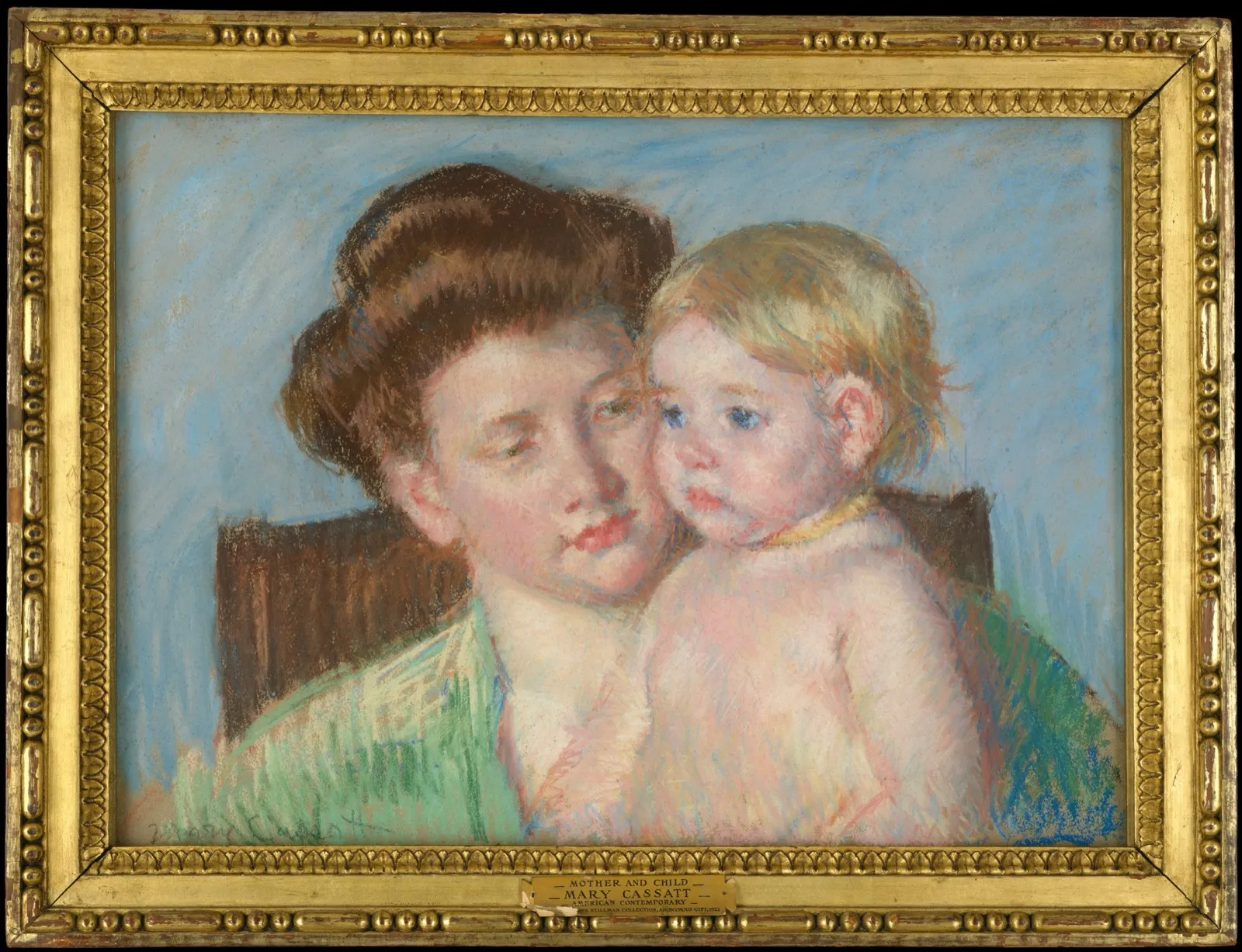 “Mother and Child” by Mary Cassatt, about 1910. Pastel. The Metropolitan Museum of Art. CC0.
How do you ask when the story is complicated?
Not every birth was a happy one, and not every family is a simple one. You may have been born early, or after a loss, or to a parent who was young, alone or frightened. You may have been adopted, or born through surrogacy, or raised by people other than the ones who gave birth to you. One of your parents may have died, and the other may have left. A birth may have been an emergency in which your mother nearly died, which she has never wanted to describe.
Three principles help.
Ask what they are willing to give. You are not entitled to the whole account, and a parent who tells you the story of your birth is giving you something. Start with a general question such as “Would you tell me what you remember about the day I was born?” and follow where they go. If they stop, let them. The gaps are information too, and the conversation can be reopened.
Do not assume which parent knows. If your father was not in the room, he may still remember the waiting, the phone calls and what he was told. If one parent has died, ask the other, a grandparent, an aunt or an older sibling, who may remember the day from the outside. If you were adopted, the people who raised you hold the story of your arrival in their home, which is also a beginning.
Ask each parent separately. The two accounts of the same day rarely match, and the differences are the most revealing part. One parent remembers the long night, the other the first minute. For more on easing into a conversation like this, see how to talk to ageing parents. Hearing both gives you a fuller picture than either could.
Why film the answers?
A written note records that you were born at four in the morning in a hospital whose name has since changed. A film records your mother’s face as she says it, the pause before she describes the moment she first held you, and the laugh when your father admits he fainted. The expression is the evidence. It tells you what the day meant, which no certificate can.
There is also a plain argument from time. The parents who remember your birth are, by the nature of things, a generation ahead of you, and the generation after you will want to know the same thing about their own beginnings, and yours. Since 2020 I have filmed more than a hundred life stories, and it is common for a person to say something about their own childhood that their children have never heard, because nobody asked.
You do not need equipment. A phone propped against a pile of books, a quiet room and an old photograph from the first year are enough, and how to film an interview at home covers the practical details. If you would like the questions to arrive one at a time, the Everyone app does that and saves each answer as a short video, though any camera will do.
Start with one question
Choose a quiet moment, ideally at a meal or in the car, and ask, “What do you remember about the day I was born?” Then do not interrupt. The first answer is usually short and the second is longer, because the first one reminds them of something. You may hear things you have never been told, such as a name you nearly had, a journey in the middle of the night, or the person who was there and has since gone.
Your birth is the one day of your life on which someone else was fully paying attention, and the account of it is in a person who will not always be available to give it. Ask this week, and if you can, press record.